
What Does OSHA Require for Jobsite Toilets?
OSHA 1926.51(c) lays out the table plainly: 20 workers or fewer needs 1 toilet facility. Once you cross 20 workers, the rule shifts to 1 toilet seat plus 1 urinal for every 40 workers, and that ratio holds until you reach 200 workers, where it eases slightly to 1 seat and 1 urinal per 50. A crew of 35 framing a subdivision near Redwood, 6.2 miles south of San Marcos, needs 2 toilet facilities under that bracket. A 75-person crew needs 2 seats and 2 urinals. General industry sites, as opposed to active construction, follow a separate ratio under 29 CFR 1910.141(c)(1)(i) instead. Most contractors we work with start with our standard porta potty rental and add units as headcount grows. If you're bidding a job and need the math done for you before you commit, our OSHA portable toilet requirements page walks through every bracket in detail.
How Many Porta Potties Do I Need for an Event?
Events run on a different formula than jobsites because people show up in clusters, not shifts. The rough rule: 1 unit per 50 guests for a 4-hour event. Push past 4 hours, and you add units, because usage doesn't scale in a straight line once people have been drinking or dancing for six hours.
| Guests | 4 hours | 6 hours | 8 hours |
|---|---|---|---|
| 50 | 1 | 2 | 2 |
| 100 | 2 | 3 | 4 |
| 200 | 4 | 5 | 6 |
| 500 | 8 | 10 | 12 |
A wedding for 150 near Martindale, 7.4 miles east of San Marcos, running 5 hours, lands between the 100 and 200 rows, so plan for 3 to 4 units. Add one ADA-compliant unit per ADA Standards 213.2, which requires at least 5 percent of clustered single-user units be accessible, and never fewer than one. Our event restroom rental and wedding restroom rental pages both build from this table.
Does Serving Alcohol Change the Count?
Yes. Alcohol adds trips to the restroom and slows down each visit, so bump your count by roughly 20 to 25 percent above the base table. A 200-guest festival that would normally need 4 units should plan for 5, and if there's a beer garden or open bar running the whole event, lean toward the higher end. Multi-day events compound this further: a 3-day county fair needs the same per-day ratio applied each day, plus a servicing schedule that keeps pace, since ANSI/PSAI Z4.3 sets a baseline of one service visit per week for up to 10 users over a standard 40-hour week, and a festival crowd blows past that fast. If you're planning something like the events that draw crowds near Buda, 18.2 miles north of San Marcos, check our festival restroom rental or concert restroom rental guides before you lock in a headcount.
Worked Example: A 40-Person Construction Crew
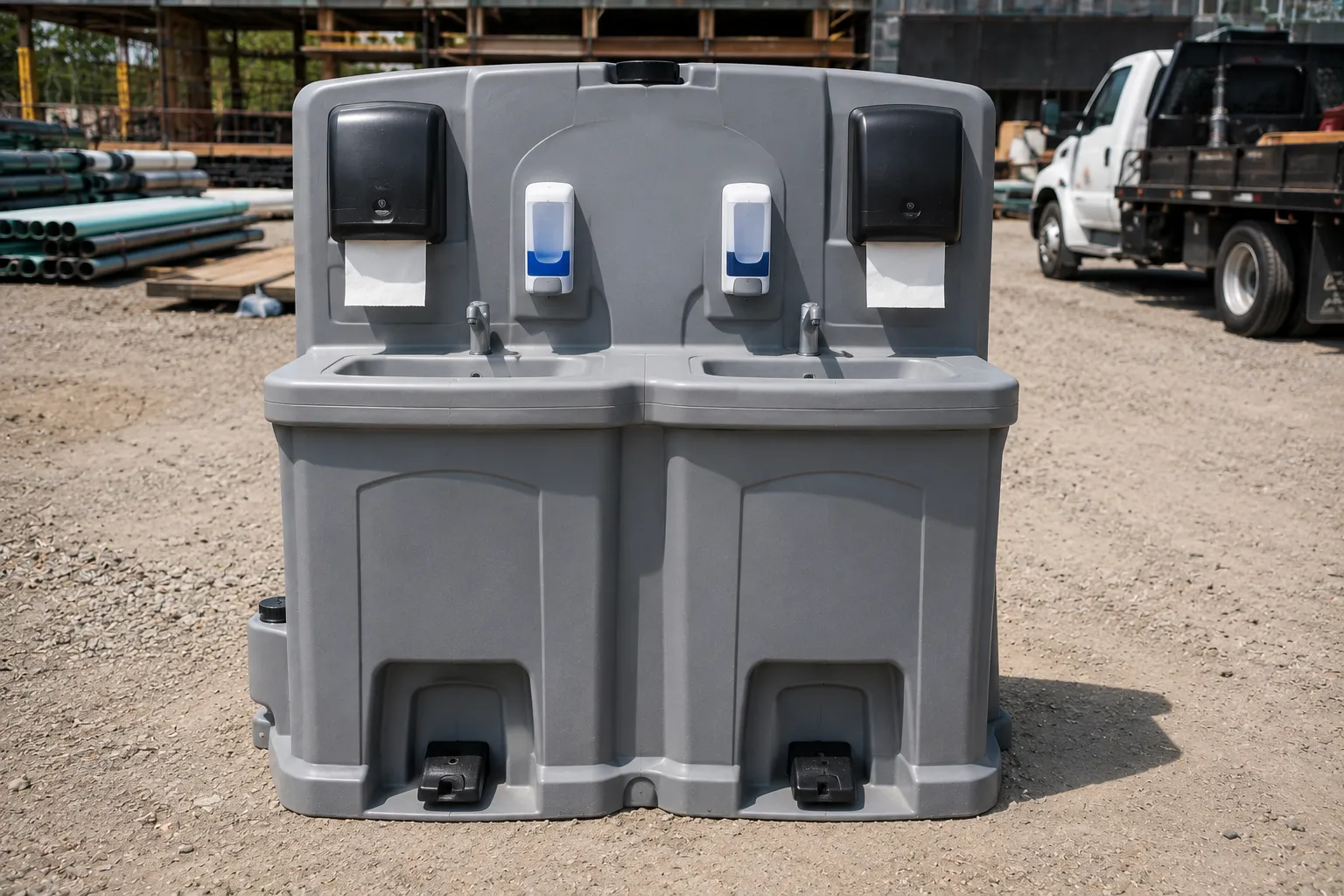
Take a 40-person crew building a strip center on the edge of San Marcos. Under OSHA 1926.51(c), 40 workers sits right at the top of the "20 or fewer" bracket's neighbor tier, so you need 1 seat and 1 urinal per 40 workers, meaning 2 facilities minimum. Add a handwashing station if the crew is applying paints, coatings or insecticides, since OSHA 1926.51(f)(1) specifically requires washing facilities in that situation, not as a general rule. A standard unit rental for a month typically runs in the $125 to $325 range depending on service frequency and site access. Pair that with a handwashing station rental and you've covered both the toilet count and the contaminant-specific washing rule. For longer builds, our monthly porta potty rental page breaks down the billing cycle.
Worked Example: A 300-Guest Outdoor Wedding
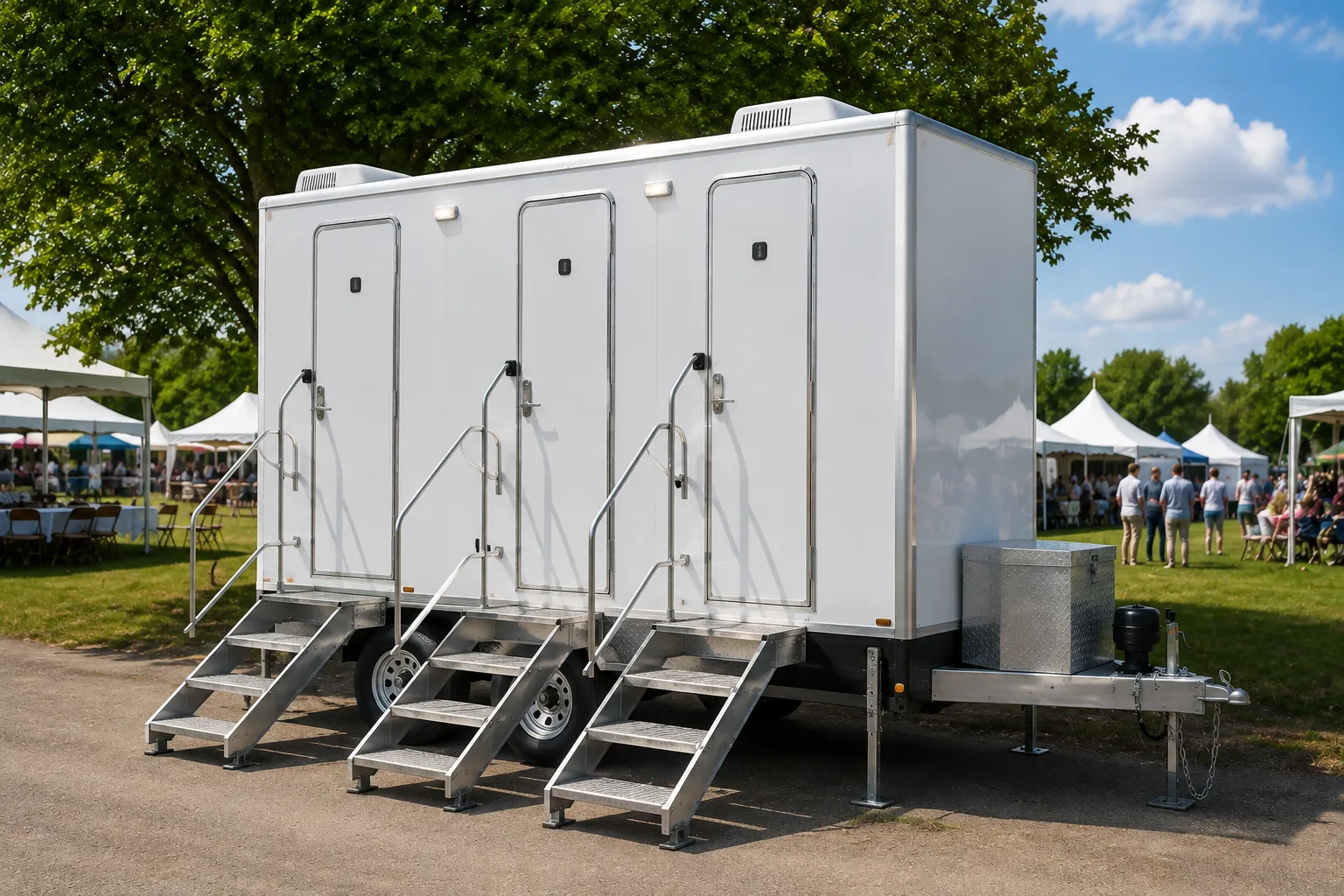
A 300-guest wedding running 6 hours falls between the 200 and 500 rows on the event table, so plan for 7 to 8 standard units. If the couple wants something nicer than a standard unit for guests, a deluxe flushable porta potty rental runs $150 to $290 for the week, and one ADA accessible porta potty unit satisfies ADA Standards 213.2's minimum. If the budget allows for a restroom trailer instead of a bank of single units, our 4 stall restroom trailer page covers weekly rates that run higher than daily but come with climate control and mirrors, which matters for a wedding near Seguin, 20.0 miles south of San Marcos, where the venue may not have running water.
How Big Is a Roll-Off Dumpster and How Much Weight Can It Hold?
Dumpster sizing questions come up constantly alongside toilet counts, especially on construction jobs that need both. A 10 yard dumpster runs about 10 feet long, which answers how many feet is a 10 yard dumpster, and holds roughly 270 cubic feet of debris (the answer to how many cubic feet in a 10 yard dumpster), suited to small cleanouts. A 20 yard dumpster measures around 22 feet and holds close to 540 cubic feet, typically rated for 2 to 3 tons depending on the hauler's weight limit, which is the usual answer to how many tons does a 20 yard dumpster hold. A 30 yard dumpster holds around 810 cubic feet and is usually rated for 3 to 4 tons, which is what most people mean when they ask how many tons can a 30 yard dumpster hold. A 40 yard dumpster holds about 1,080 cubic feet, the answer to how many cubic feet in a 40 yard dumpster, and typically carries a 4 to 5 ton rating, which covers how many tons does a 40 yard dumpster hold, though the exact tonnage depends on what you're throwing away, since shingles and concrete weigh far more than framing scrap per cubic foot. Weekly dumpster rental typically runs $426 to $778 depending on size and hauler. Our dumpster sizes and dimensions page has the full breakdown, and dumpster weight limits covers what happens if you go over. Remember a roll-off delivery needs about 60 feet of straight clearance behind the truck, so measure your driveway or job site access before booking through our roll-off dumpster rental page.
Where Should Units Be Placed on Site?
Placement affects your count as much as headcount does, because units spread across a large site or split between floors effectively need duplication to stay accessible. ADA Standards 403.5.1 requires a 36 inch clear route to any accessible unit, and 404.2.3 requires a 32 inch clear door opening, so don't tuck your ADA unit behind equipment or a fence line. A stable, firm, slip-resistant surface is required under ADA Standards 302.1, which rules out loose gravel or soft turf for accessible placement. If your site spans multiple work zones, or you're running temporary fence rental around a perimeter, plan one cluster of units per zone rather than one central bank that makes workers walk the length of the site. Our porta potty placement guide covers ground surface, clearance and service truck access in more depth, and if you're unsure whether your right-of-way placement needs sign-off, confirm with the City of San Marcos directly, since that rule varies by location and isn't something to guess at.
How many porta potties do I need per 100 people?
Plan on 2 units per 100 guests for a 4-hour event, rising to 3 or 4 if the event runs past 6 hours or serves alcohol. That's the baseline from the event table above. For jobsites, headcount matters less than shift length and whether workers are spread across a large footprint; see how many porta potties do i need for the full bracket breakdown.
How many tons does a 30 yard dumpster hold?
A 30 yard dumpster typically holds 3 to 4 tons, though the exact rating depends on the hauler and what's inside. Concrete and shingles hit that ceiling fast, while wood framing and drywall take longer to reach the weight limit. Check our dumpster weight limits page before loading anything dense.
How many cubic feet are in a 20 yard dumpster?
A 20 yard dumpster holds about 540 cubic feet of debris, in a container roughly 22 feet long. That's enough for a mid-size home cleanout or a small remodel's worth of demo debris. See 20 yard dumpster rental for dimensions and delivery details.
Do I need an ADA-compliant unit for a small event?
Yes, even for a small cluster of units. ADA Standards 213.2 requires at least 5 percent of clustered portable toilets be accessible, with a minimum of one unit regardless of how few you're renting. A single-unit event still needs that one unit to meet accessible specs.
How often do porta potties get serviced during a multi-day event?
ANSI/PSAI Z4.3 sets a baseline of one service visit per week for up to 10 users over a standard 40-hour week, but that pace doesn't hold for a busy multi-day festival. High-traffic events typically need daily servicing to keep tanks and supplies stocked. Our how often are porta potties cleaned page covers scheduling in detail.
What's the difference between jobsite and event unit counts?
Jobsite counts follow OSHA 1926.51(c) brackets tied to worker headcount and shift length, while event counts follow a guest-per-hour ratio that scales with alcohol service and event duration. A 40-person job crew and a 40-guest party need very different unit counts because usage patterns don't match. Start with construction site services or event restroom rental depending on which applies.
Next step
Get a delivery date
Tell us the address, the dates and the headcount. We size the order and confirm the route.