
How Fast Can Sanitation Be Set Up After a Disaster?
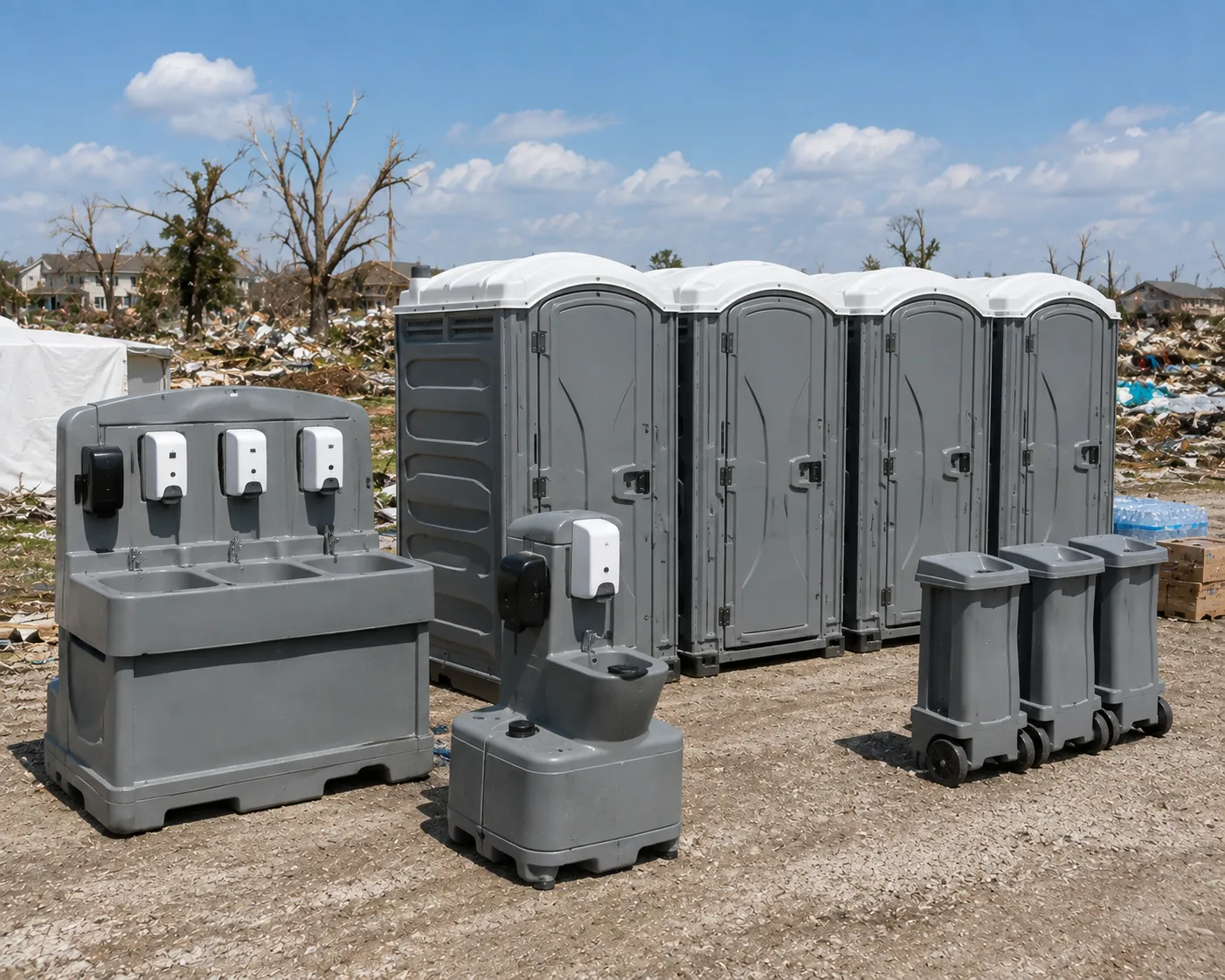
Speed matters more than anything else in a disaster response. Eagle View Porta Potty treats these calls as emergency porta potty rental requests, which means trucks get loaded before the paperwork is finished. A standard unit weighs enough and sits at about 44 by 48 inches on the ground, which lets crews place several units on a gravel lot, a church parking area or a school field without heavy equipment. If the site needs a bigger footprint fast, a holding tank rental can sit alongside the toilets to catch greywater from temporary kitchens or medical tents. Redwood sits 6.2 miles south of San Marcos and Martindale sits 7.4 miles east, both close enough that a shared disaster staging area can serve San Marcos and its closest neighbors from one dispatch run. When roads are compromised, that short drive matters. Crews also bring hand sanitizer station rental units for locations where running water is not yet restored. For shelters that need a full washroom instead of a single unit, a restroom trailer rental can be delivered once ground access is confirmed, though a standard delivery still needs roughly 60 feet of straight clearance behind the truck. That clearance requirement does not disappear just because the situation is urgent.
What Do Shelters and Relief Sites Actually Need?
Every shelter needs water, toilets and a way to wash hands, and OSHA 1926.51(a)(1) requires an adequate supply of potable water in any place of employment, which extends naturally to relief workers on site. For toilet counts, OSHA 1926.51(c) sets the baseline construction ratio at one facility per 20 workers, and disaster response crews often use that same ratio when planning shelter capacity. A shelter housing displaced families is not a construction site, but the ratio gives coordinators a workable starting number until local health officials issue different guidance, and the portable restroom rental page covers unit options for that kind of planning. Handwashing is separate from toilets. 29 CFR 1910.141(d)(2) requires washing facilities to have soap and towels or a hand-drying device, and hand sanitizer alone does not satisfy that. That is why Eagle View Porta Potty pairs handwashing station rental units with every toilet cluster at a relief site, not just sanitizer stands. For accessibility, ADA Standards section 213.2 calls for at least 5 percent of clustered single-user units to be accessible, with a minimum of one, so shelters with several standard porta potty rental units on site should have at least one ADA accessible porta potty in the mix. Coordinators planning capacity from scratch can start with the how many porta potties do i need guide before trucks roll, and the OSHA portable toilet requirements page lays out the ratio math in more detail.
Where Should Units Be Placed on a Damaged Site?
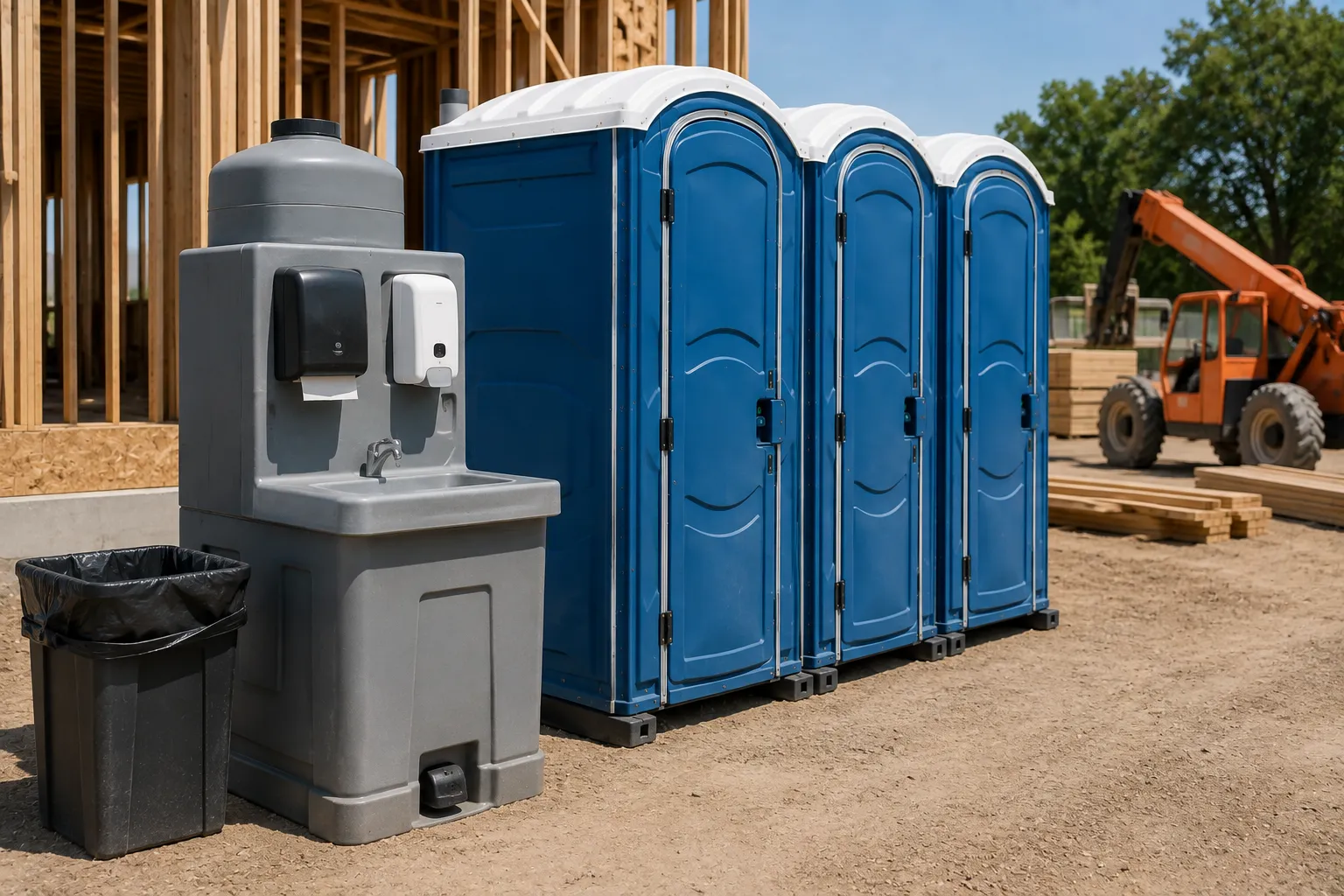
Placement decisions after a disaster are harder than on a normal job site, because ground conditions change fast and access routes shift. ADA Standards section 302.1 requires floor and ground surfaces to be stable, firm and slip resistant, which rules out soft mud or debris-covered ground for accessible units even in an emergency. A clear route to each unit needs at least 36 inches of width under ADA Standards section 403.5.1, and unit doorways need a minimum 32 inch clear opening under ADA Standards section 404.2.3. Downed trees, collapsed fencing and debris piles complicate this fast, so many relief coordinators bring in a temporary fence rental to secure a clean perimeter around toilets and handwashing stations before the public arrives. If the site is actively being cleared, a roll-off dumpster rental helps keep debris away from walking paths, and coordinators unsure of sizing can check dumpster sizes and dimensions before ordering. Full placement guidance, including turning space and reach requirements, is covered in the porta potty placement guide, and the broader ADA restroom requirements page walks through turning circles and reach ranges for coordinators setting up multiple clusters. San Marcos relief sites near open fields often have room to spread units out, which actually makes ADA-compliant spacing easier than on a tight urban lot, and sites further out can check the service areas page or the porta potty rental in Seguin page for coverage 20.0 miles south.
How quickly can Eagle View Porta Potty respond after a disaster?
Dispatch happens before paperwork clears in true emergencies, with standard units delivered from stock already staged near San Marcos. Response speed depends on road access and site clearance, especially the 60 foot straight approach some deliveries need, a factor also covered on the porta potty rental checklist. Call ahead if a specific shelter deadline exists.
Do disaster relief sites need accessible units?
Yes. ADA Standards section 213.2 requires at least 5 percent of clustered single-user toilets to be accessible, with one unit minimum regardless of cluster size. Shelters expecting elderly or mobility-impaired residents should request accessible units up front rather than adding them later, using the ADA accessible porta potty page to confirm specs.
Can hand sanitizer stations replace handwashing stations at a shelter?
No. 29 CFR 1910.141(d)(2) requires soap and towels or a hand-drying device, and sanitizer does not meet that standard. Shelters need actual portable sink rental or handwashing station units alongside any sanitizer stands.
What happens if the relief site has no clear road access?
Crews assess access before delivery, since standard trucks need about 60 feet of clearance behind the unit. If a site is blocked, coordinators should call Eagle View Porta Potty directly to plan an alternate drop point nearby, or start with a request a quote submission so dispatch has the details in advance.
How many toilets does a shelter need for 100 people?
Using the OSHA 1926.51(c) ratio of one toilet per 20 workers as a planning baseline, 100 people would need roughly five units. Actual shelter needs vary with duration and water access, so coordinators should confirm counts using the how many porta potties do i need guide.
Next step
Get a delivery date
Tell us the address, the dates and the headcount. We size the order and confirm the route.