
How Do Porta Potties Work?
Under the seat sits a tank, not a pipe to a sewer line. Waste drops in, mixes with a blue chemical treatment that breaks down solids and knocks down smell, and stays there until a pump truck empties it. A vent stack pulls odor up and out above head height instead of leaking it into the stall. Standard units measure about 44 by 48 inches on the ground and stand roughly 92 inches tall, which is why they fit tight jobsite corners and backyard spots alike. A construction worker running to a porta potty during a break expects a working door latch, some light through a roof vent, and a tank that has not filled past the line. That is basic upkeep, and it is why service intervals matter more than the unit itself. Curious what a standard rental actually looks like on paper? The standard porta potty rental page breaks down what is included, and the porta john rental page covers the same unit under a different name people search for.
How Do Flushable Porta Potties Work?
Flushable units use a small onboard freshwater tank and a foot pump or handle to push a rinse of water into the holding tank after each use, instead of relying on gravity and chemical treatment alone. That freshwater flush is what separates a deluxe flushable porta potty from a standard unit. Deluxe units still hold waste in a sealed tank below, same as a standard model, but the rinse cuts odor between service visits and feels closer to a home bathroom. They cost more to rent and to service because they carry more moving parts and need a freshwater refill on top of the waste pump-out. Weddings and corporate events near San Marcos usually spring for deluxe or an ADA accessible porta potty instead of standard units, since guests notice the difference. If you are weighing which type fits your event, the event restroom rental guide walks through the tradeoffs.
How Does a Portable Sink Work?
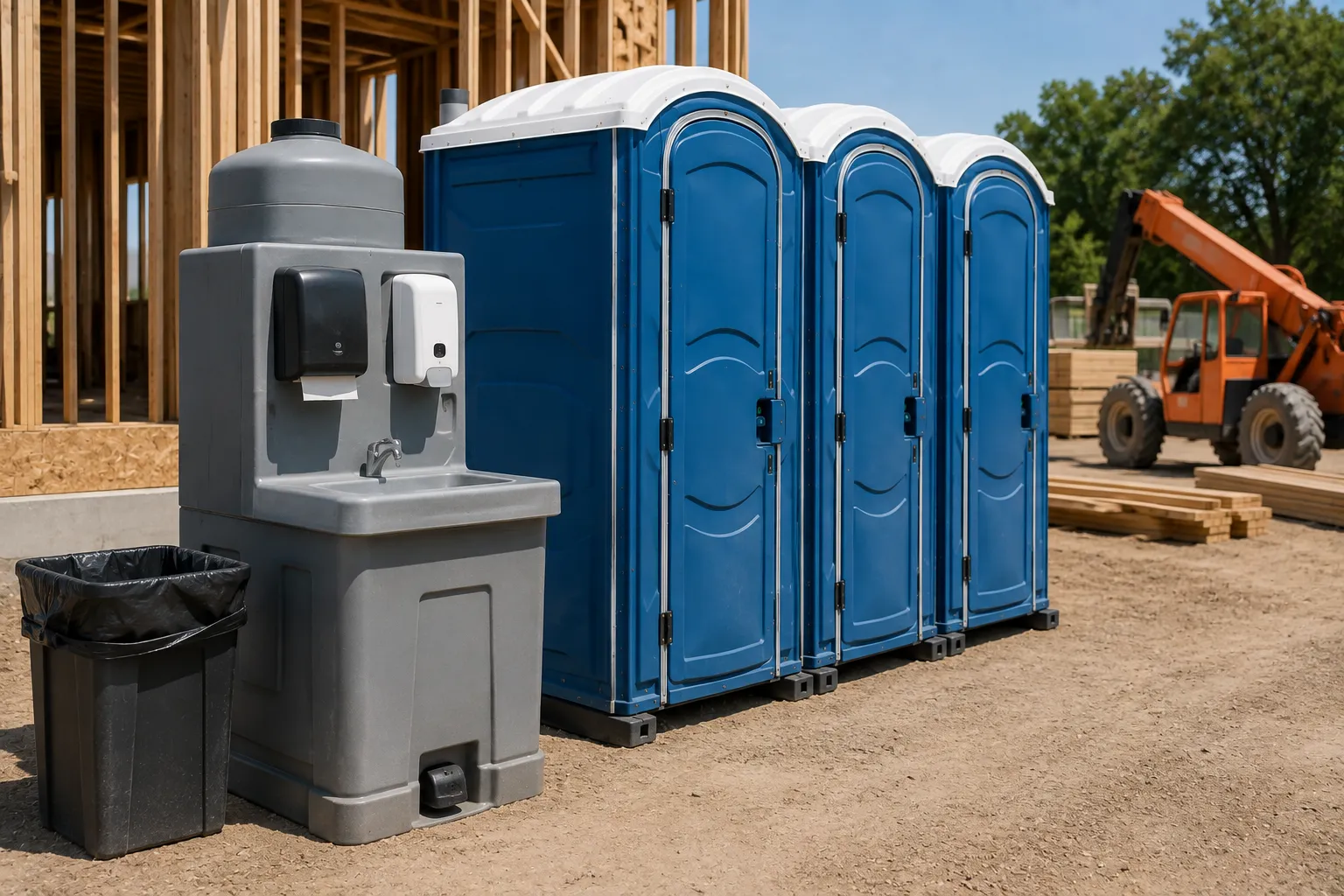
A portable sink is a self-contained unit with its own freshwater tank, a foot pump or hand pump to push water through the faucet, and a wastewater tank underneath to catch the runoff, so no plumbing hookup is needed. Most also carry a soap dispenser and paper towel holder built in. Under 29 CFR 1910.141(d)(2), washing facilities need soap and towels or a hand-drying device, since hand sanitizer alone does not satisfy that standard. That rule is why a handwashing station rental or a portable sink rental gets paired with porta potties on food service jobs and farm labor sites rather than swapped in as a substitute. Under OSHA 1928.110, agricultural operations need potable water, toilets, and handwashing within a quarter mile walk of hand-labor employees, at one facility per 20 workers. Farms working land outside San Marcos toward Martindale, 7.4 miles east, or Redwood, 6.2 miles south, plan their unit count around that walking distance rule.
How Do Camping Porta Potties Work?
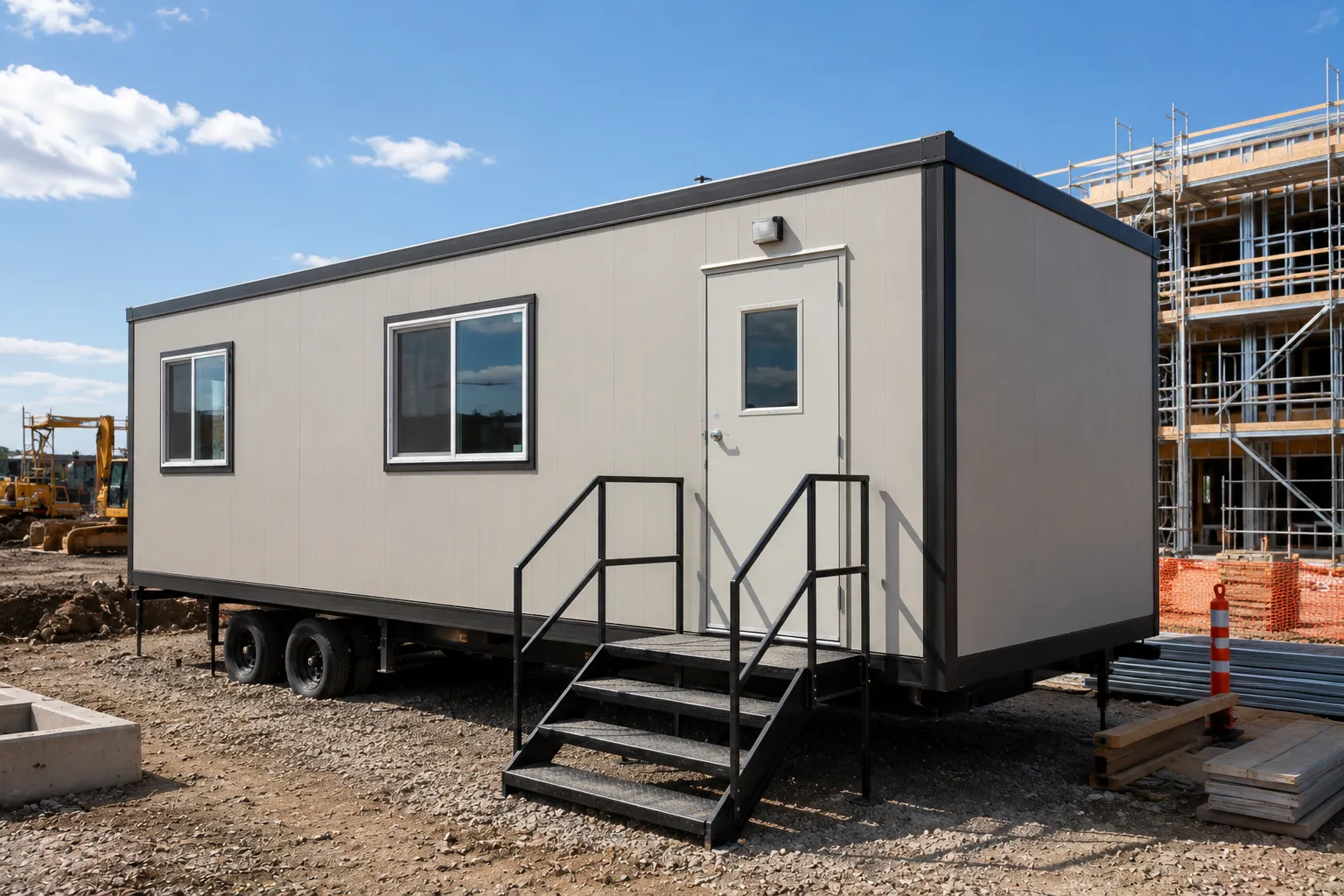
Camping and event rentals work the same way as jobsite units: sealed tank, chemical treatment, vented stack. The difference is placement and service frequency rather than the mechanics inside. ANSI/PSAI Z4.3 sets a baseline service interval of one visit per week for up to 10 users over a 40-hour week, but a weekend festival or a camping trip packs more use into fewer hours, so Eagle View Porta Potty schedules extra pump-outs around heavy weekend traffic. Camping trips near San Marcos often rent through the camping porta potty page rather than a standard construction unit, since delivery windows and pickup timing differ. For weekend festivals or fairs, the festival restroom rental and county fair restrooms pages cover unit counts by expected crowd size.
What Chemicals Go in a Porta Potty?
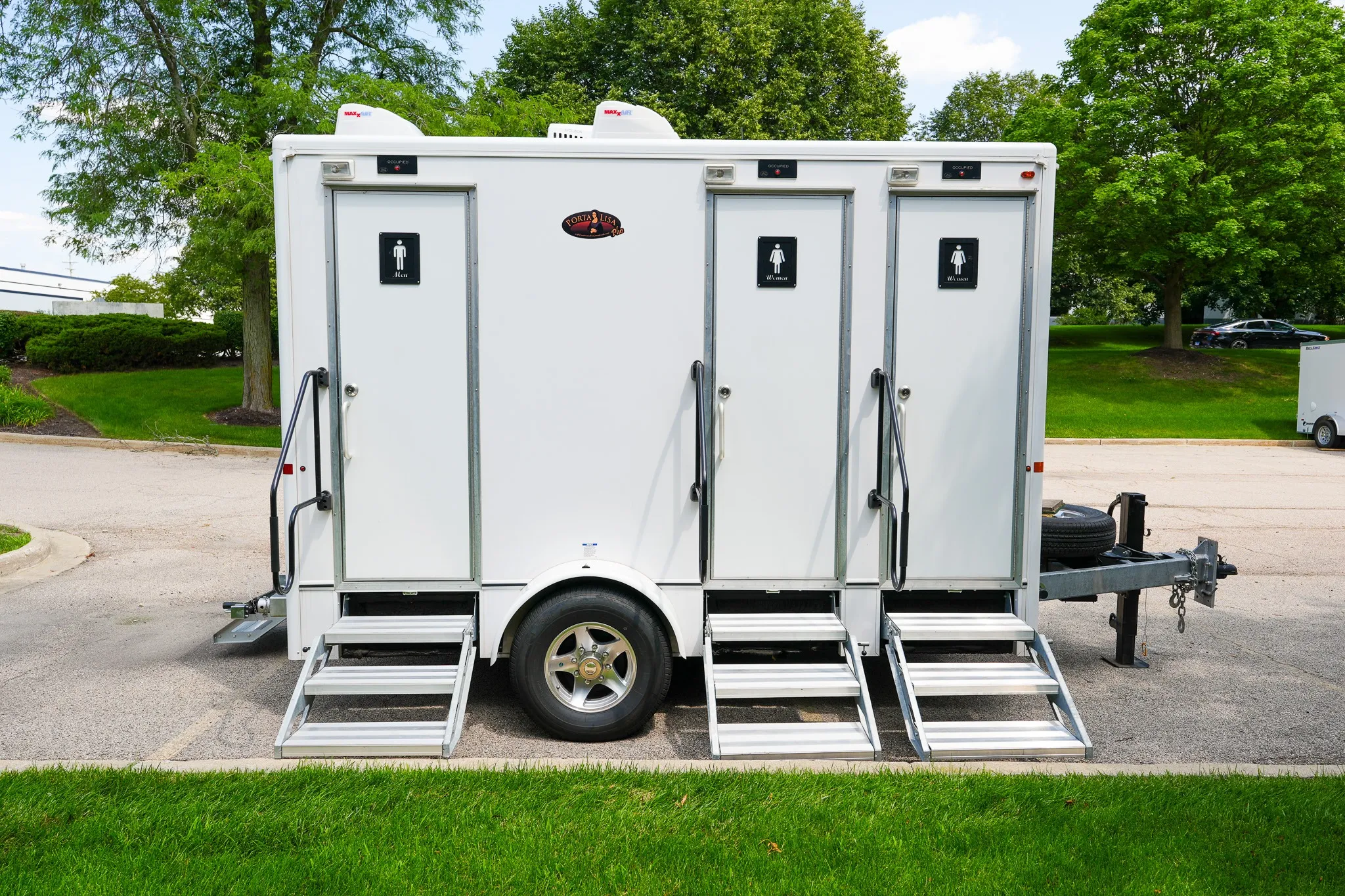
The blue liquid in a porta potty tank is a deodorizing and enzyme treatment that breaks down waste and controls odor between service visits; it is not the same as septic tank cleaning chemicals used in a home system. Homeowners searching for portable toilet chemicals near me are usually thinking about the tank treatment inside a rented unit, which Eagle View Porta Potty restocks at every scheduled service. That is different from a residential septic tank, which is typically pumped every 3 to 5 years depending on tank size and household size, a maintenance question covered on the septic pumping service and how often to pump a septic tank pages.
| unit | duration | typical price |
|---|---|---|
| standard | day | $150 |
| standard | week | $200 |
| standard | month | $200 |
| deluxe | day | $300 |
| ada | day | $230 |
Construction crews planning toilet counts by headcount should check OSHA portable toilet requirements, which walks through OSHA 1926.51(c): one toilet for 20 or fewer workers, then one toilet seat and one urinal per 40 workers up to 200. For a full cost breakdown by rental length, see porta potty rental cost or the porta potty rental per day page.
Do porta potties smell bad?
A well-serviced unit should not smell strongly, since the chemical treatment and vent stack are built to control odor between pump-outs. Smell usually means a unit is overdue for service or overfilled. See do porta potties smell for what drives odor and how often units need pumping.
How often are porta potties cleaned?
Standard service runs weekly under the ANSI/PSAI Z4.3 baseline for up to 10 users, but high-traffic construction sites or events often need two or three visits a week. Check how often are porta potties cleaned for scheduling by crew size.
How many porta potties do I need for a job site?
Count depends on worker headcount under OSHA 1926.51(c): one unit per 20 workers up to 20, then a toilet seat and urinal per 40 workers beyond that. The how many porta potties do I need guide runs the numbers by crew size.
Are porta potties ADA accessible?
Not every unit is. Under ADA Standards 213.2, clustered single-user units need at least 5 percent accessible, never fewer than one. See ADA accessible porta potty for unit specs and the ADA restroom requirements guide for site layout rules.
Do I need a permit to place a porta potty in San Marcos?
Placement in the public right of way needs confirming with the city; we have not verified a specific San Marcos ordinance for this. Check the porta potty permit requirements page before delivery, and see the porta potty placement guide for setup basics.
Next step
Get a delivery date
Tell us the address, the dates and the headcount. We size the order and confirm the route.